
At Half Price Roof, we are steadfast in our commitment to superior roofing and restoration services. Full-spectrum residential and commercial solutions.
Homeowners are often surprised to hear that wind can cause damage to their homes. While fallen branches and downed power lines are visible dangers, wind itself can result in structural damage.
High winds can create hazards on your property such as fallen branches, uprooted trees, and downed power lines. Wind may also cause structural damage to your home.
When severe winds strike a roof, shingles may become loose or fall off. Even fresh, secure shingles might be torn away by severe winds.
Wind tends to harm the margins of the roof or portions that are already loose. These unsecured areas are easy targets for wind damage.
Roofs are particularly vulnerable to wind damage because powerful winds do not strike them equally. Wind tends to harm the margins of the roof or portions that are already loose.
Because winds may readily pull loose shingles, initiating a chain reaction, these unsecured areas of the roof are easy targets. Roofs are frequently damaged by falling items and garbage. After sustained wind damage, your roof may begin to leak or decay as a result of water exposure.
Which Roof Is Better For Heavy Winds?
If you want the ideal high-wind roof, the decking beneath the shingles must be solid and durable, and your fasteners must be of good quality. Craftsmanship is essential. Some metal roofs may resist wind rates of up to 150 miles per hour.
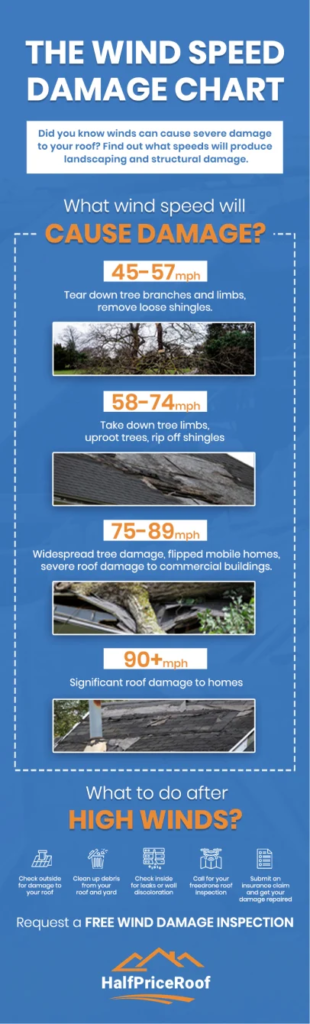
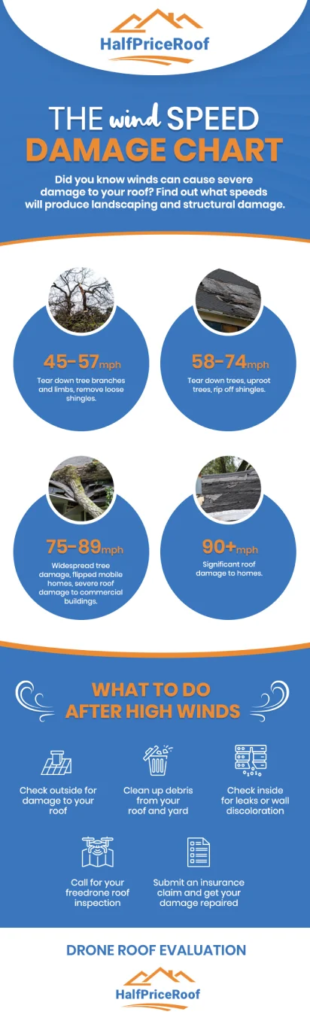
45-57mph
Remove any loose tree branches and limbs. These non-severe winds may cause some tree limbs to break off and damage to shingles that are already loose or vulnerable.
58-74mph
Tear down trees, uproot trees, and take tiles off roofs. Winds in this range will pull down entire tree branches, uproot trees, peel off shingles in good shape, and cause chimney problems.
75-89mph
Widespread tree damage, overturned mobile homes, and serious roof damage to commercial structures and residential buildings.
90+mph
Wind at this speed will inflict widespread damage to trees, flip mobile homes, and cause substantial roof damage to commercial and residential structures.
If you’ve recently experienced gusts of 45 mph or greater, look for these common signs of roof damage.
The loss of complete shingles is one of the most obvious signs. If you discover shingles in your yard, you should have an expert inspect the area.
Wind is more likely to cause damage to the roof's edges. Look for curling shingles where the wind got a grip and started peeling them.
Wind can induce granule loss (the sandpaper-like component of the shingle). Check your gutters where granules tend to collect.
If you see discoloration, damp areas, or flaking paint inside, your roof is most likely leaking from wind damage.
Soffit and fascia keep water away from the roof. Wind can produce fractures, loose sections, or completely blow off loose fascia.
Is your chimney leaning? Missing flashing can fracture the barrier surrounding the chimney and allow water to enter.
If you have wind damage to your roof, you may be eligible to file a homeowners insurance claim. Let our experts guide you through the process.
Our experts use cutting-edge drone technology to thoroughly document all roof damage from every angle.
We provide a detailed report identifying the source of damage, necessary repairs, and cost estimates
We educate you on your coverage and help ensure no critical repairs to your roof are overlooked.
Our team works alongside you throughout the claims process to maximize your coverage benefits.
Looking for a roofer or general contractor in the Cincinnati area? Contact Half Price Roof today at